5 ways you can be harming your skin

As the Christmas period looms just a few weeks ahead, the chances are that many of us will be trying every trick in the book to beautify and perfect our appearance for highly anticipated Christmas parties and events. Whether you want to look your best at the office Christmas doo or want to wow your friends back home, it’s time to think carefully about your skincare regime now so that you’re not caught out.

Here’s a look at some of the potential things that you might be doing wrong in your quest for better looking skin but ultimately may be harming your skincare routine in the long run.

Waxing

For many men and women, waxing is the most obvious way to remove hair quickly and achieve a smooth silky looking skin. However, waxing can lead to a number of issues for your body that can affect your health and comfort. For example, a Brazilian wax to the bikini area could increase the risk of infection. Noted dermatologist – Dr. Krant – has stated that “pulling the hairs out of those areas increases the risk that tiny skin tears will get bacteria in them that was never meant to be inside the skin. It can cause surface infections and even deeper cellulitis in some cases.” It’s one of the reasons why we recommend Laser Hair Removal as a less painful option for getting rid of large areas of hair.

Shaving

For all of us shaving can quickly become a timely and annoying task. The Dermal Institute have estimated that the average man can spend 6 months of his life just shaving his beard such is the inconvenience, so we can’t imagine how much time is spent on everywhere else! Perhaps the cheapest and fastest way to remove unwanted hair, shaving carries with it a number of potential dangers to your skin. For the first part, many shaving products and the razor itself can remove the natural oils and barriers that protect your skin from harmful bacteria. Shaving with a blunt blade or incorrectly can lead to razor bumps or ingrown hairs, which can in turn, become inflamed and even infected, leaving you red-faced and uncomfortable.

Overuse of products

We’ve all been there – a breakout of bad acne and you desperately try to get rid of it by plastering your face with as many products as you can!

Likewise, just as you go out partying over Christmas, you may be wearing make-up more than usual and as such, need to remove it more regularly with make-up wipes. However, using these products can often strip the skin of valuable natural oils that help protect the skin and keep it looking firm, plush and healthy. In some cases, too much usage of a skin product can lead to irritation, block pores and even the odd horrible infection.

Whilst natural oils for your skin are much needed, simply using a “natural” product doesn’t necessarily make it good for you. Leading dermatologist, Dr. Allison Arthur, has commented that “another natural product I see being used a lot is coconut oil. Using that as a moisturizer in areas like the arms and the legs is typically fine, but I don’t recommend using it on the face because it can clog pores and make acne worse”. Mixing too much with other products could also lead to allergic reactions that could do more damage than good.

Scrubbing acne

Likewise, many people may take the obvious approach of constantly washing their face in the hope that it will clear up the acne. In fact, too much showering or scrubbing can remove those natural oils as well! This can leave you with dry and irritated skin that is lacking a protective barrier. Furthermore, if you’re washing too frequently, your body may respond by overproducing oil for the skin later on – which can lead to blocked pores and an overly oily skin.

ULTRAcel for Mummy Tummy

Your new little bundle of joy has finally arrived. Not only are you sleep deprived, frazzled, and down to your last possible nerve, but you also have yet another problem thanks to that beautiful baby – mummy tummy. Lots of new mums suffer from that frustrating, sagging loose skin filled with stretch marks after the baby arrives. After all, your body had to gain at least fifteen pounds over the course of nine months, and that can be difficult on your skin. What can you do to fight the results? Sure, you could spend hours in the gym doing crunches, but the reality is that wont always help the loose skin. ULTRAcel is one of the best options we have available to help you fight that mummy tummy.

ULTRAcel offers three treatments in one. The first is a high intensity focused ultrasound. That helps to target the SMAS skin layer, then create thermal wounds, which pushes your body to begin a healing process that involves tightening and lifting the skin. Part two is Grid Fractional Radio Frequency, or GFR for short. It applies heat to the dermis and epidermis, which can smooth the collagen and create new collagen. Fractional Radiofrequency Microneedling is part three. It uses microneedling and radiofrequency to help create the collagen production your body really needs now to heal those stretch marks.

Not sure Ultracel will work for you? We also offer a couple of other great choices as well.

Ultraformer HIFU – This is a high intensity focused ultrasound tool that is both simple and non-invasive. The applicator is simply placed on the area you’d like to tighten, then the energy targets the lowest layers of the dermis, which generates heat. That can push the collagen production, which rejuvenates the problem areas. After a single treatment, that mummy tummy will have almost completely disappeared.

Radiofrequency Microneedling – If you’re concerned about the stretch marks you still see, this is perhaps the best way to deal with them. Using a series of tiny needles, the skin is penetrating, which leads to the added collagen your skin needs to repair those stretch marks. The treatment time is quick, which makes it the perfect option if you’re looking to get in and get back to baby sooner.

Surgery doesn’t have to be your only option after the baby arrives. Instead, you can use one of these treatments to help you deal with the saggy, loose skin and stretch marks. Contact us today to learn more.

Hyperpigmentation vs. Melasma – What’s the Difference?

You notice them every time you look in the mirror – they’re dark spots that just never seem to go away. A quick online search to learn more about what they are is likely to reveal two terms with which you may not be familiar – hyperpigmentation and melasma.

What are these conditions, and which one are you fighting right now?

hyperpigmentation

Hyperpigmentation is a fairly common skin condition. It affects millions of people across the globe each year. It’s completely harmless, but you’ll typically notice it right off.

Patches of your skin become darker than normal in colour. It happens when too much melanin, a brown pigment that is typical in your body, creates as small deposit under the surface of the skin.

The result is those uneven patches you notice in the mirror.

Melasma

Hyperpigmentation comes in many different varieties, and melasma is one of those. Sometimes called chloasma spots, melasma involves large areas of darkened skin.

It’s usually a direct result of hormonal changes.

Pregnant women often notice them, as do women who are on birth control. Melasma patches can appear almost anywhere. Most people develop them on their :

  • cheeks
  • across noses
  • on chins
  • upper lips
  • forearms
  • neck

hyperpigmentation

Treatment Options

Whether you’re suffering with melasma or another form of hyperpigmentation, you don’t have to deal with the discolouration.

You do have options.

Your best first option is to use better protection every time you head out into the sun. The sun will only make those discolourations appear darker. Choose a broad spectrum sunscreen, and reapply frequently if you plan to be in the sun for some time.

Beyond that, though, you can even your skin tone with two of our top treatments – our Cosmelan Peel or our Laser Pigmentation Removal service.

  • Cosmelan is the leading depigmentation peel. It works to even out your skin tone and remove all pigmentation. The treatment has an efficiency rate of up to 95% when treating pigmentation and dark spots.
  • Laser pigmentation removal uses wavelengths of light that shatters the discolouration and uses the body’s lymphatic system to remove them. You’ll see results within just a few sessions, and there are very few side effects.

Stop staring at those spots in the mirror and do something about them! Book with us today.

Microneedling – the solution to stretchmarks

Can microneedling help remove stretch marks?

Across our 8 London clinics we are noticing more men and women are turning to microneedling to deal with their stretch marks. Stretch marks are most commonly caused by changes in weight and pregnancy and occur when your skin stretches quickly.

what are stretch marks?

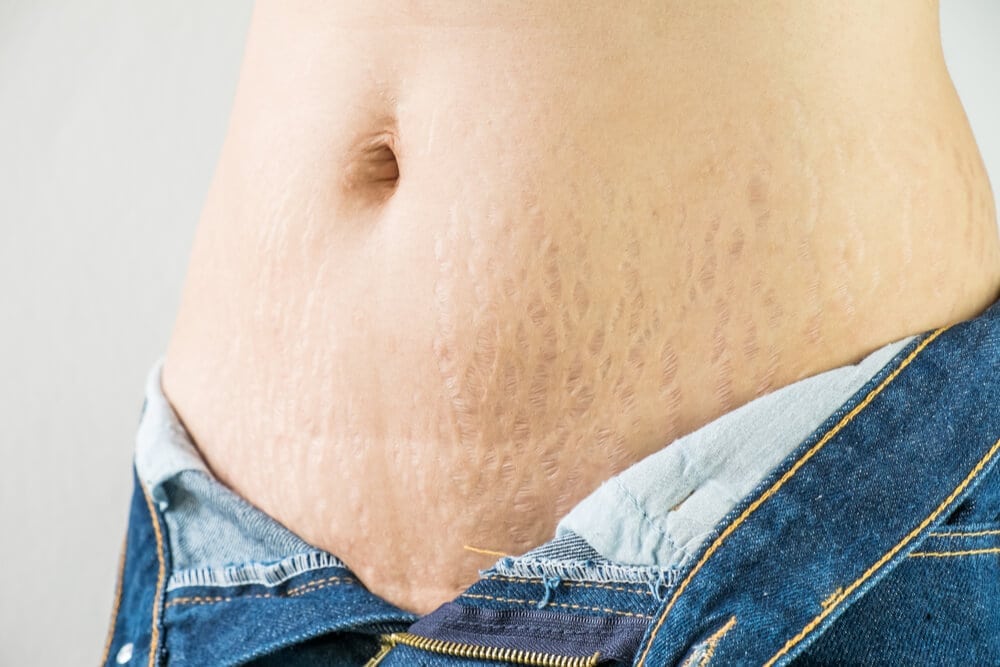
Stretch marks rarely cause medical problems but can have a negative impact on your self-esteem and quality of life and are a a major aesthetic concern for some.

They can appear white in colour, lighter brown, or sometimes red depending on your skin tone and can cause some edema or swelling. Mature stretch marks are linear and a type of atrophic scar where the skin heals below the normal level.

stretch marks on stomach

The most common areas for stretch marks

Stretch marks can appear anywhere on the body, most commonly:

  • stomach
  • inner thighs
  • buttocks
  • breasts
  • arms

If they are unsightly and you feel self conscious, there is a solution; a technique called microneedling.

What is microneedling?

Microneedling is a form of collagen induction therapy. It is a fractional treatment as only a small part of the skin is affected. It is a safe, simple, minimally invasive procedure and effective treatment for a range of conditions from acne to stretch marks and skin rejuvenation. There are now a number of devices available to perform microneedling, ranging from the derma roller to the Dermapen.

Collagen induction therapy

Collagen induction therapy refers to a treatment that stimulates your body to produce collagen and elastin. Collagen and elastin are vital for skin health and the production decreases as we age. They give your skin its elastic qualities, strength youthful appearance.

Microneedling and stretch marks

Microneedling is a way of stimulating your body’s healing processes. This heals skin naturally. It makes sense that you might be wary of the idea of subjecting yourself to hundreds of micro wounds, but microneedling is a safe way to use your own body’s natural response to get rid of stretch marks.

Each micro injury created results in your body starting a healing process. This process increases your body’s natural production of collagen and elastin.

These naturally fight the signs of ageing and improve the tone of your skin.

Microneedling has also been used to :

There are a few different approaches that are useful:

Different types of microneedling

We provide the three leading manufacturers of RF microneedling and microneedling technology. They are Ultracel, Infini and Dermapen and are available across our 8 London clinics.

This combines radio frequency microneedling with high intensity, focused ultrasound. The “RF” in Ultracel RF microneedling stands for the radio frequency microneedling device that delivers heat, tightening deeper layers of skin and not just the surface layer.

The high intensity ultrasound is precisely focused to stimulate the growth of collagen. It travels below the top layer of the skin and works at the deeper layers leaving the upper layers of skin for the microneedling. In effect it is a treatment that works on the outside and inside making it a powerful and effective choice.

This is a precise technology where you can customise treatments in a very exact way. Its uses 49 micro needles and can penetrate to 3.5mm. It also takes advantage of radio frequency microneedling to heat and tighten deeper layers of collagen. It’s very useful for eliminating wrinkles and scars for those with darker or more tanned skin tones.

Dermapen microneedling is ideal for a course of treatment designed to repair deep wrinkles, scars, and blotches. It’s the most prolific microneedling approach and is suited for a broad range of skin tightening and tone improvement. Unlike RF microneedling, Dermapen does not send a radio frequency down in to the deeper layers of the skin.

stretch mark removal on buttocks

microneedling for stretch marks costs

Depending on the treatment you opt for will determine how much you pay. Expect to pay for a series of treatments rather then one treatment as multiple treatments are often required for best results.

Dermapen microneedling prices start from £183 

RF microneedling prices start from £270

Ultracel prices start from £270

Is microneedling safe for stretch mark removal?

Microneedling is safe and is an FDA-approved electronic fractional device. It heals skin naturally and is an ideal way to take years off your look. It can help with imperfections as precise as very fine wrinkles, or as broad as stretch marks.

While adverse reactions are rare, possible side effects include scarring, infection, skin and tissue necrosis, herpes simplex outbreak, hyperpigmentation and hypopigmentation. Any skin colour changes normally fades within 6 months, but in rare instances could be permanent. This reaction is more common if you have a darker skin tones.

microneedling aftercare

Straight after the procedure your skin will feel tighter, maybe swollen, drier and sensitive to the touch. It’ll also look and feel sunburned.

Sensitivity and redness reduce within 24 hours. You may also experience itching, bleeding or bruising, scabbing, and the treated area may darken. Your skin may feel like rough like sandpaper but this should only last 2-7 days as your skin flakes off, being replaced by new tissue.

Avoid the sun following treatment as it can worsen the treated area. Avoiding direct sun exposure both before and after treatment.

Is microneedling for me?

Different types of microneedling and courses of treatment are ideal for different people who are looking for it to solve different problems. Your first step if you are thinking about do something about your stretch marks is to speak a skin specialist. That may be your doctor, dermatologist or skin expert at a clinic like ours

Microneedling stretch marks treatment near me

If you live in London or near on of our 9 clinics then why not speak to us about treating your stretch marks with microneedling.

We have been treating and advising Londoners since 2008 with their laser and skin issues. We can help you figure out the approach that will best help you heal scars, achieve a younger look, or get rid of stretch marks whether that be through microneedling or other treatments.

The 101 on Birthmarks

If you’re struggling to find common ground with someone, thinking there is just nothing similar about you, well… chances are you both have birthmarks! Over 80 percent of babies are born with them, and sometimes, they don’t fade as you (and your skin) grow. So what are these little marks? And if they cause you concern, how can you remove them?

Baby, I Was Born This Way!

Birthmarks are often referred to as “irregularities” or “blemishes.” They are simply areas of discolouration that appear at or shortly after birth. What causes them? Well, folklore holds that the marks represent unmet wishes of the mother while carrying her baby. She had a craving for strawberries that went unfulfilled? Her child would have a pinkish birthmark. Thanks, Mum!

Modern science doesn’t have an exact answer for why people get them. They’re just there, and the vast majority of time, they are harmless. Many even fade away on their own. There are generally two types of birthmarks:

  • Vascular: Red, pink, or purplish in colour, these appear as a result of abnormal blood vessels under the skin.
  • Pigmented: Usually brown, these appear as a result of pigment cell clustering.

Only in relatively rare cases do birthmarks signal larger health issues. For example, a strawberry mark on the eyelid may interfere with normal vision development. Depending on the type of birthmark, however, they may be a source of concern in terms of your appearance. Port wine stains, for instance, typically appear on the face and do not fade on their own.

Birthmark Removal

Our Laser Pigmentation Removal process works to deliver a smooth, even tone to your skin. Wavelengths of light are introduced to the affected area. It works to shatter the pigments, which are then absorbed by the body’s lymphatic system.

At Premier Laser & Skin, our experienced practitioners conduct a thorough consultation to determine if laser treatment is the best option. During the procedure, you may feel a slight tingling sensation, but most clients find this completely tolerable. We apply aloe vera after to soothe the skin.

There is virtually no downtime associated with this treatment, and you can soon begin to enjoy clear, even skin. If birthmarks are troubling you, contact us straightaway.

Freckles vs. Pigmentation

If you’ve been watching the runways and magazines covers recently you will have seen models with freckles and other pigmentation conditions. Fashion houses have finally embraced more diverse models recently which is refreshing and reflective of who their customers are.

We’re seeing faces in a gorgeous spectrum of colours, and we’re also seeing more “non-traditional” looks.

While freckles and pigmentation are being embraced in the mainstream, there is often a little confusion about freckles.

Here’s what you need to know when it comes your freckles

is hyperpigmentation the same as freckles

Hyperpigmentation, melasma and freckles are skin conditions commonly appearing in both men and women. They occur when melanin is produced in skin cells which leads to dark pigmented patches or spots on the skin’s surface

Freckles are a form of hyperpigmentation. Let’s back up: what is pigmentation? It’s simply the colour of your skin. Our skin (and hair and irises) gets its colour from a pigment called melanin.

Everyone has pigmentation: people who produce more melanin have darker skin and vice-versa.

It’s natural, and the differences just make the world a more beautiful place!

(But no matter what your skin colour, protect yourself from UV rays with SPF!)

There are two types of freckle:

  • Ephelides freckles : These appear during exposure to sunlight during summer. They are usually light brown in colour and will fade by winter .
  • Lentigine freckles: These are much darker and are more permanent in nature.

Genetics

Here’s where people go astray when it comes to these little spots: they think they’re caused by sun damage. Not so. You can actually thank mum and dad for them or chromosome 4q32-q34 to be precise!. They’re genetic. They do, however, appear when the skin is exposed to the sun.

model with freckleshow to get rid of freckles permanently with laser

As mentioned, freckles are a type of hyperpigmentation. People with them produce more than enough melanin, but it does not distribute evenly across the skin. This causes the little localised areas of discolouration, fondly (or not!) known as freckles.

And those with freckles – just like those without – should always wear sun protection. This will help abnormalities from forming. But even with vigilant protection, they’ll still have freckles thanks to those genes. Laser therapy has proven to be effective for freckle removal.

laser therapy for freckles

If you’re looking to treat your freckles there are a range of solutions clinics can offer you. Before you think about any laser therapies the first step is always to get a in depth diagnosis by a skin specialists.

You can have different types of pigmentation on your body so it is important to have a thorough skin analysis before choosing a treatment.

After a diagnosis treatments could include:

Laser Pigmentation Removal:

This treatment is quick, easy and painless. A laser is applied to shatter the pigments so they can be naturally absorbed by your body’s lymphatic system.

Pigmentation Peel:

This peel speeds up the skin’s own rejuvenation process while reaching damaged surface layers and providing deep exfoliation. It delivers an even, smooth skin tone.

revlite freckle removal

RevLite laser treatment refers to the wavelength of light used to target the skin. The laser light is absorbed by the pigment in freckles. The Revlite also known as PTP (PhotoAcoustic Technology Pulse), shatters the freckle pigmentation and the melanin is released to surface of the skin,. It it the shed as normal.

freckles and uv sunshineis laser treatment for pigmentation safe

Laser treatment for pigmentation is generally regarded as a safe and low risk treatment. Laser should always be used by experienced practitioners in a reputable clinic or medical practice.

The risk of scarring is low as are the side effects. As with any cosmetic treatment you should always talk over your concerns with your practitioner.

how long for freckles to fade after ipl treatment

As the laser light shatters the pigment the pigment is then naturally absorbed by your body. Your freckles which have been treated with laser may initially get darker in the first 24 hours after treatment and then slowly fade away over the next 1 to 2 weeks.

are freckles removed permanently

Results are permanent if you take care of your skin properly there should be no recurrence. If you get exposed to too much sun and  UV radiation freckles can reappear.

how effective is freckle removal?

Laser treatments are very effective for treating freckles. Complete removal can be done in one session although some people may need more then one session.

freckle removal london

Premier Laser have 9 clinics across London and are London’s leading independent laser specialists. Since 2008 we have performed over 500,000 laser and skin treatments on Londoners. If you live in London and you want to remove freckling, contact us for a free consultation. Your practitioner will recommend the right treatment depending on your skin’s needs.

What are Milia – And What Can You Do About Them?

You have small raised white bumps on your face, around your eyelids, forehead and cheeks. They’re hard and have an obvious whitehead, so you might try to pop them like you would a pimple. But they just won’t go away. What are these little bumps (and bothers), and what can you do about them?

They’re called milia. Unlike a pimple, these are closed comedones. That is, the follicle is completely blocked, and there is a pronounced whitehead. Dead skin cells are trapped under the skin, and these little white bothers pop up.

If you want to get technical, milia are papules, as opposed to pustules, or pimples. And unlike pimples, they are neither inflamed nor red. They are not painful, itchy or harmful. What they are, though, is persistent. They just don’t go away! They may linger there for weeks or months.

Milia can co-occur with typical acne and blackheads or on their own. They can come out of nowhere or be triggered by skin injuries such as sunburns, sun damage, burns and blistering rashes.

What Can You Do?

Exfoliating regularly and avoiding heavy, cloying moisturiser can help you avoid milia. But what do you do if they’ve made an unwelcome appearance? You may be surprised. Advanced electrolysis. Our clinics are highly experienced in advanced electrolysis techniques that will help you achieve clear skin.

While typically associated with hair removal, advanced electrolysis can treat mila, as well as thread and red veins, spider naevus, skin tags, warts, blood spots, and age spots. A tiny needle (about as thin as an eyelash) is inserted into the affected area and a targeted electric current is applied. This releases the trapped bacteria, allowing your skin to heal.

Milia can be a source of embarrassment and frustration. Contact our clinic for expert assistance, so you can look and feel your best.

What is Sublative Radiofrequency?

Sublative radiofrequency. For many this will sound like jargon, but in this blog we will uncover what this great treatment does.  It’s an effective solution for ageing, loose, sagging, scarred and/or uneven skin.

Results without Damage

Sometimes, procedures intended to treat the skin cause damage that can exacerbate the issues you originally wanted to address. Fraxel and Titan, for example, are laser treatments that work by overheating the top layer of skin, causing unnecessary trauma. These aggressive techniques can leave you dissatisfied with results and the experience as a whole.

Sublative radiofrequency is different. Instead of lasers, it utilises advanced radiofrequency technology. This targets the layers below the surface to stimulate cell regrowth. Essentially, it works from the inside out.

Inside Out

So, what goes on underneath the surface that makes sublative radiofrequency so effective? Fractionated bipolar radiofrequency energy is applied via a handheld device to the skin in a series of grid-like patterns. This triggers an accelerated healing process in the targeted skin, and your body naturally begins to produce collagen. New, healthy, skin cells start to generate.

One of the first questions people have is, is it painful? No. Sublative rejuvenation is a comfortable procedure, and you will be done within about 30 minutes. Within just days, you will see visible results.

Can Sublative Radiofrequency Help Me?

This technology is safe and effective for all skin types. It addresses the following issues:

  • Brown spots.
  • Age-related textural irregularities.
  • Acne scarring.
  • Skin laxity and sagging.

The result is smooth, firm skin that looks and feels its best.

Previously, people could only expect these type of results with surgery. No more. You do not have to go under the knife to look and feel your best. Schedule your consultation with our expert team today.

What are Freckles – And What Are Your Options If You Want to Treat Them?

Freckles are a common skin concern, some love their freckles, where as others may wish they weren’t so visible. In this blog we will uncover what freckles are – and how you can treat them effectively?

First, know that freckles are not themselves harmful, nor do they indicate a health problem. They are simply small, flat pigment cells, typically light brown or tan in colour. Once again, we can thank genetics. Freckling is a recessive trait; if both parents have it, they can pass it on to their children. It is associated with the MC1R gene, which regulates skin pigment.

But have you ever seen a baby with freckles? Nope. They can have birthmarks and moles, but not freckles. This is because these spots of melanin appear and are darkened with exposure to sunlight. This is why you’ll notice more prominent freckling during the summer.

But while sun can cause freckles to appear and multiply, they are not a sign of skin damage, they are simply just your skin type. You can do everything perfectly in regards to protecting yourself from the sun, and you’re still going to have freckles.”

So if you’re sun-smart, freckles are fine. But what if, aesthetically, you’re not fine with freckles? Laser pigmentation removal is an effective option; wavelengths of light are applied to the affected area. This shatters the pigments, which are then removed via the lymphatic system.

There are also pigmentation peel alternatives: Cosmelan is a topical treatment that targets cells that are involved in pigmentation. It prevents melanin production, which can lighten blemishes and spots. SkinBrite is another option: this deep exfoliator penetrates damaged layers of the skin. By accelerating the skin’s natural renewal process, it can reveal an even complexion.

There is certainly nothing wrong with freckles; but if you would feel more comfortable and confidence with more even skin, you have effective options to pursue.

Book your free consultation today!

The Mystery of Undereye Dark Circles – And How to Solve It

You look… tired. Even after a night’s rest. Even after a relaxing, restful vacation. Dark circles under your eyes make you look exhausted, older and less vibrant.

  • But what exactly are they?
  • What causes them?
  • And most importantly, how do you erase them from your face?

What are Dark Circles?

Throughout most of your body, the skin is about 2 mm thick. Under the eyes, however, it is only 0.5 mm. Periorbital dark circles occur when the skin below the eyes shows blood vessels and pools. If you have light or fair skin, the contrast is more striking – that is, the circles are darker.

They appear bluish in people with fair complexions because the skin only allows in the blue wavelength of light. So essentially, dark under eye circles reflect the light from the blood under this thin skin.

We associate dark circles with lack of sleep; this is because this slows circulation and blood is allowed to pool.

Exacerbating the problem, as we age, our skin loses elasticity and becomes thinner. This creates the appearance of deep circles. You may also blame your family: genes play a large role in whether or not you are prone to these blemishes.

Effective Treatments for Dark Circles

Fortunately, there are great treatment options for those struggling with dark under eye circles. Our recommendations:

combining microneedling with radiofrequency, this treatment stimulates the production of collagen and assists in plumping and firming skin. The thin skin under the eyes becomes more full and less able to reflect blue light.

puffiness or “bags” often accompany dark circles. Dermal fillers work to retain lost volume under the eyes, resulting in brighter, more youthful eyes.

this technique works by penetrating beyond the surface of the skin to prompt cell regrowth. The gentle heat targets the connective tissue, allowing it to contract and lift.

Mystery solved! The only question left is which treatment is right for you. Book your consultation to find out.